 "Eight Candles of Consciousness"
A collection of essays on Hanukkah and non-violence by Rabbi Yonassan Gershom (author of "Beyond the Ashes," etc.) covering 30+ years of his war resistance
An 85-page PDF ebook file on a data CD that can be read on any computer using Adobe Reader(If you don't have Adobe Reader, you can download it FREE on the official Adobe.com site.)
Although Rabbi Gershom is best known for his books on reincarnation (Beyond the Ashes, From Ashes to healing, and Jewish Tales of Reincarnation,) he is also a lifelong pacifist and peace activist, who has written many articles on Judaism and non-violence. During the 1970s and 80s when he was living in Minneapolis, he was a familiar figure at rallies and protests. Today he continues his activism via the Internet . This book contains the best of his writing on peace and justice over the last 40 years. Included is his kabbalistic Hanukkah service, "Eight Candles of Consciousness," based on correspondences between the meditative chakras and the sefirot on the Kabbalah Tree of Life.On this auction page, you can read the entire Author's Introduction, and/or scroll down for the Table of Contents.
The Author's Introduction:
Most of the material in this book was first published over two decades ago. Why reprint these articles now? Because a new generation of Jews has grown up since then — a generation that, by and large, is totally unaware of the non-violent traditions within Judaism.
“The gentle Jews are gone,” wrote Chaim Potok in his book, Wanderings. Sadly, that is mostly true. As Israel’s former Prime Minister, Golda Meir, said back in the 1960s, “I can forgive the Arabs for attacking. But I cannot forgive that Jewish boys had to learn how to kill.” The very fact that soldiering was seen as something unusual for Jews shows that most were, if not actual pacifists, then at least basically non-violent people. Sadly, this is true no more.
My generation – the post-Holocaust “Baby Boomers” – marked the transition from 2000 years of Jewish pacifism into the militarism of Israeli society today. We saw the martyrs of the Holocaust labeled as “cowards who did not fight back.” We saw King David glorified into a war hero instead of “the sweet singer of psalms.” And we saw Judah Maccabee – who was not even mentioned by name in the Talmud – resurrected into a Jewish Rambo.
In Israel today, all citizens, male and female, are required to do military service, except for some Orthodox groups who are then disparaged by their fellow citizens as “social parasites.” (See “Yeshiva Students not Undermining the War Effort.”) “Jewish pacifist” is now considered an oxymoron, as each day we are confronted with more violence between Israel and her neighbors. Secular conscientious objectors are often jailed for refusing to serve in the Israeli armed forces. Even the choice of biblical Hebrew over Yiddish as the national language of Israel reflects the rejection of our mostly non-violent past.
The transformation of Hanukkah from “The Miracle of the Oil” into “The Victory of the Maccabees” is symbolic of this shift. When I was growing up in the 1950s, Judah Maccabee was rarely mentioned, if at all. We knew a war had taken place, but that wasn’t the focus. Hanukkah was about rekindling the Menorah in the Temple and in our own hearts. For me, with my lifelong interest in nature study, it was also deeply connected to the Winter Solstice. In 1969 I wrote a poem entitled “Season’s Greetings” (included in this collection) which emphasized the connection between the candles of Hanukkah, the lights of Christmas, and the countless fires that have driven away the darkness from the homes of human beings since the dawn of time. Although Hanukkah doesn’t always fall exactly on the Solstice, it does come with a waning moon. Because Jewish months are lunar, when Hanukkah starts on the 25th of Kislev, the moon is always in its last quarter, thereby further emphasizing the contrast between light and darkness.
An old Jewish legend tells how the First Humans experienced their first winter outside the Garden of Eden. As the days grew shorter and the sun sank lower in the sky, Adam and Eve feared that the daylight would disappear altogether. So they began building huge bonfires to signal the sun to return. And gradually, the days grew longer.
Human beings have craved light at this time of year ever since. In an age when electricity allows us to illuminate our homes and streets, it is difficult to really grasp how frightening the long winter nights were to our ancestors. Old Hasidic stories speak of waiting for the moon to rise before continuing a journey – not for any reasons of astrology, but because, without street lights, you literally could not see your hand in front of your face. This is still true in places where light pollution has not obscured the sky. One of the first things I learned after moving to the country was how very dark it can be on a moonless night.
In the years before television, winter was a time for sitting in front of the hearth and listening to traditional stories. So much so, that, in many cultures, specific “Winter Tales” were told only in that season. Even certain crafts were reserved for the long nights indoors. As a Navajo weaver told me, “Only spiders spin in the summer.”
Of course, without the Maccabees, there would be no Hanukkah and probably no Jews. We would have all become Greeks and disappeared as a people. In fact, it has been argued that Hanukkah was the first war fought for religious freedom. Resisting assimilation, standing up for the right to be who you are, refusing to worship the idols of the State – these are important themes. But, as I pointed out in “Armed Resistance is Not the Only Way,” there are alternatives to violence for carrying on this struggle.
There is another, lesser-known resistance story which took place in the time of the Roman Emperor Caligula. This Emperor, like Antiochus, before him, believed himself to be a god. He ordered his statue erected and worshipped in every temple in the land. The people of Jerusalem not only refused, they came out and staged what may well be the world’s first sit-in. Whole families blocked the road into Jerusalem, refusing to move. The Roman general cordoned off the crowd, hoping to cow them into submission with hunger and thirst. Some died, the rest refused to budge.
After three days of this, the Roman general raised his sword and told the people to either clear the road or be killed. The Jews refused to move. Whereupon the general lost heart for a slaughter of non-resisting civilians. Lowering his sword, he disobeyed his emperor and refused to carry out the order. (Based on an account by Josephus.)
In recent years, many Israelis have begun to question whether the military solution is the right way to bring peace. Here is not the place to analyze Mid-East politics. Suffice it to say that, after the war between Israel and Lebanon this year (2006), numerous articles have appeared in the Israeli press, criticizing the war and questioning what, if anything, it actually accomplished. Did bombing Lebanon into rubble make Israel any safer? Or did it create more support for those who want to destroy her? Will building a wall between Israel and Palestine keep terrorists out? Or will it shut Israel away from the rest of the world?
These are the kinds of questions that I was asking twenty years ago, at a time when criticism of Israel was equated with treason in the Jewish community. One reason for publishing this collection of essays now is to bear witness to this legacy of questioning – not to salve my ego, but to re-illuminate the non-violent forms of resistance we never hear about in Hebrew school. (How many Jews today even know about the sit-in recorded by Josephus? ) We need to pass these tales and traditions of war resistance “from generation to generation.” Hence this book.
These essays are the actions and thoughts of one Jewish pacifist. Right now is a hard time to be a war resister, but resist we must, if the world is to survive. May the light of your Solstice fire – in whatever form it may take -- help illuminate the way out of darkness toward the light of peace.
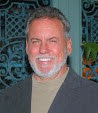
Rabbi Yonassan Gershom
Winter, 2006/5767



 "Eight Candles of Consciousness"


